





Why 1500W is the Ultimate 'Sweet Spot' for Pure Sine Wave Inverters in 2026
- Key Takeaways: The 1500W Advantage at a Glance
- What is a 1500W Pure Sine Wave Car Inverter and Why Does It Matter?
- The 'Goldilocks' Factor: Why 1500W is the Sweet Spot for 2026
- What Can a 1500W Inverter Actually Run?
- Battery Bank Sizing: The Fuel for Your 1500W Engine
- Installation & Safety: Critical Requirements for 1500 Watts
- Common Mistakes & Expert Tips (Gap Analysis)
- Conclusion
- FAQ
- Can a 1500W inverter run a microwave?
- How many batteries do I need for a 1500 watt inverter?
- What size wire do I need for a 1500 watt power inverter?
- Will a 1500W inverter drain my car battery?
- What is the difference between peak and continuous power?
- Do I need a pure sine wave inverter for a laptop?
- Can I connect a 1500W inverter to a cigarette lighter?
- What happens if I overload a 1500W inverter?
In the rapidly evolving world of mobile power, selecting the right inverter often feels like navigating a minefield of technical jargon. However, for most vehicle-based adventures and mobile offices in 2026, one specific capacity stands out as the perfect balance between capability and cost: the 1500W Pure Sine Wave Inverter. Whether you are optimizing for 12V to 110V inverter efficiency or ensuring your Starlink stays online, 1500W is the "Goldilocks" solution you have been looking for.
Key Takeaways: The 1500W Advantage at a Glance
A 1500W inverter serves as the ideal middle ground, bridging the gap between underpowered 1000W units and the expensive, complex electrical overhauls required for 2000W+ systems.
- Summary Table: 1500W vs. 1000W vs. 2000W
- 1000W: Often trips breakers when starting inductive loads (like blenders).
- 1500W (The Sweet Spot): Runs 95% of household appliances, fits standard alternators, and uses manageable cable sizes.
- 2000W+: Requires massive battery banks, 0 AWG cabling, and often a high-output alternator upgrade.
- Minimum Threshold: It is the lowest wattage that can reliably handle the startup surge of a standard microwave or coffee maker.
- Alternator Health: It balances high power output without immediately overwhelming a standard vehicle alternator (typically rated 100A-150A).
What is a 1500W Pure Sine Wave Car Inverter and Why Does It Matter?
A 1500W Pure Sine Wave Inverter is a power conversion device that transforms 12V DC battery power into clean 110V/120V AC electricity with a continuous output of 1500 watts, replicating the smooth waveform of utility grid power.
The "quality" of electricity matters significantly for modern electronics. Unlike cheaper modified sine wave units that produce blocky, "stepped" waves, a Pure Sine Wave inverter ensures low Total Harmonic Distortion (THD). This is critical for sensitive devices like CPAP machines, audio equipment, and variable-speed motors, which can overheat or fail if powered by "dirty" electricity. According to Wikipedia, pure sine wave inverters produce a wave that is identical to or even better than the power from the grid, ensuring compatibility with all AC electronic devices.
- Continuous Power: The wattage the inverter can run indefinitely (1500W).
- Surge Power: The brief spike (often 3000W) available for split seconds to start motors.
- Efficiency: Higher quality units convert power with less heat loss, maximizing your battery bank's potential.
The 'Goldilocks' Factor: Why 1500W is the Sweet Spot for 2026
The 1500W capacity is the "Sweet Spot" because it allows users to run high-draw appliances like microwaves and hair dryers without necessitating the expensive electrical infrastructure upgrades required for larger inverters.
When you analyze the pure sine wave vs modified sine wave cost benefit, the 1500W pure sine category offers the highest versatility per dollar. It avoids the "installation cliff"—the point where costs skyrocket due to cabling and alternator requirements.
- Vs. 1000W: A 1000W unit often hits its limit with inductive loads. A 900W blender might require 1200W for a fraction of a second to start. A 1000W inverter will trip; a 1500W inverter will not.
- Vs. 2000W+: Jumping to 2000W or 3000W usually forces you to upgrade to 0 AWG cables and potentially a high-output alternator. 1500W stays within the safe limits of 2 AWG or 1/0 AWG wire and standard alternators.
- Future-Proofing: With the rise of USB-C PD (Power Delivery) requiring 140W+ for laptops and Starlink Roam drawing 50W-100W continuously, 1500W provides ample headroom for multiple devices running simultaneously.
What Can a 1500W Inverter Actually Run?
A 1500W inverter can successfully power almost any standard kitchen appliance found in a mobile setup, including microwaves, coffee makers, and induction cooktops, provided they are not all used simultaneously.
One of the most common queries is about running microwave on car inverter setups. A standard compact microwave consumes about 700W to 1000W of cooking power, but its input power (what it draws from the wall) is roughly 1100W to 1400W. A 1500W inverter handles this perfectly.
- Kitchen Appliances:
- Microwaves (Input < 1500W)
- Electric Kettles (Check labels; many are 1500W exactly)
- Coffee Makers (Keurig Mini or Drip)
- Portable Induction Cooktops (Medium settings)
- Tools & Tech:
- Power Drills and Chargers
- Starlink Roam / Mobile Internet setups
- Gaming Laptops and Monitors
- Comfort:
- Hair Dryers (Low/Medium heat)
- Portable AC units (Small BTU)
- CPAP Machines (Humidifier on)
Battery Bank Sizing: The Fuel for Your 1500W Engine
To effectively utilize a 1500W inverter, you require a battery bank capable of delivering roughly 125 Amps continuous discharge, which typically means a minimum of 150Ah-200Ah for Lithium or 300Ah+ for Lead-Acid systems.
When sizing inverter battery bank capacities, math is your best friend. Wattage divided by Voltage equals Amperage (Watts / Volts = Amps). For a 1500W load: $1500W / 12V = 125 Amps$. Adding 10-15% for inverter inefficiency brings this to ~140 Amps.
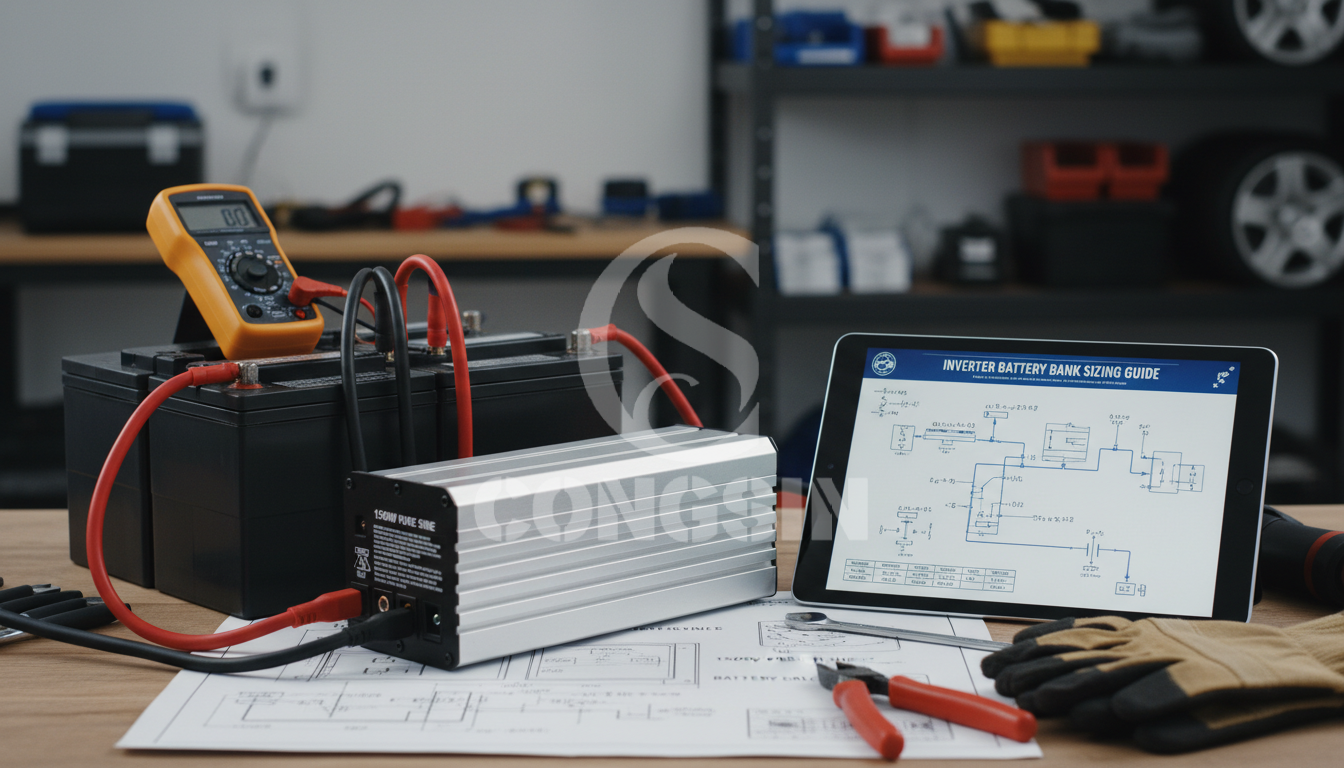
- Lead Acid / AGM: These older chemistries suffer from the Peukert Effect. If you draw high amps, effective capacity drops drastically. You generally need at least 300Ah to prevent massive voltage sag.
- LiFePO4 (Lithium): This is the superior choice for 2026. Lithium batteries maintain voltage even under heavy load. According to TimeUSB, LiFePO4 batteries have a higher discharge rate and efficiency compared to lead-acid, making them far better suited for the high-current demands of a 1500W inverter.
- BMS Limits: Ensure your Lithium battery's Battery Management System (BMS) is rated for 150A continuous discharge. A standard 100Ah battery often has a 100A BMS limit, which will shut down if you pull the full 1500W.
Installation & Safety: Critical Requirements for 1500 Watts
Safety for a 1500W installation hinges on using adequately sized cables (minimum 2 AWG) and proper fusing (150A-200A) to prevent overheating and potential fire hazards.
Using a 1500w inverter cable size calculator logic, you must account for the length of the wire. As wire length increases, resistance increases, leading to voltage drop.
- Wire Sizing:
- < 6 Feet: Use 2 AWG pure copper wire.
- 6 - 10 Feet: Upgrade to 1/0 AWG (One-Ought) wire.
- Never: Do not use Copper Clad Aluminum (CCA) wire; it carries less current and runs hotter than pure copper.
- Fusing: Install an ANL fuse (typically 200A) on the positive cable as close to the battery as possible (within 7 inches is ideal) to protect the circuit.
- Standards: Following industry guidelines is crucial. As highlighted by Marine Electric Systems, adhering to ABYC standards for wiring—such as using tinned copper for corrosion resistance and proper termination—ensures your system remains safe and reliable in mobile environments.
- Grounding: Connect the inverter's chassis ground lug to the vehicle chassis to prevent shock hazards.
Common Mistakes & Expert Tips (Gap Analysis)
The most frequent error users make with 1500W inverters is attempting to power them through a cigarette lighter socket, which is physically impossible as those ports are limited to roughly 150 Watts.
Avoiding these pitfalls ensures longevity for both your inverter and your electronics.
- Mistake - Undersizing Cables: If your inverter beeps (Low Voltage Alarm) the moment you turn on the microwave, your cables are likely too thin or loose, causing voltage to drop before it reaches the inverter.
- Mistake - Phantom Draw: Leaving the inverter "On" when not in use drains the battery. Even efficiently designed units draw 0.5A - 1.0A in standby.
- Tip - Remote Control: For campervans, mount the inverter near the batteries (for short cables) but run a remote switch to your living area so you can easily turn it off.
- Tip - Airflow: Inverters get hot. Do not mount them inside a closed cupboard without ventilation holes. Thermal throttling will cut your power mid-usage.
Conclusion
In 2026, the 1500W Pure Sine Wave inverter remains the undisputed champion of mobile power systems. It offers enough muscle to run modern comforts like microwaves and Starlink while remaining affordable and manageable regarding installation. By ensuring you have a low THD unit and a properly sized Lithium battery bank, you can enjoy grid-quality power anywhere the road takes you.
Contact us today to optimize your mobile power strategy.
FAQ
Can a 1500W inverter run a microwave?
Yes, a 1500W pure sine wave inverter can typically run a standard 700W-900W microwave. However, you must ensure the microwave's 'input' wattage (which is often higher than the cooking power and listed on the back of the unit) does not exceed 1500W. Additionally, your battery bank must be capable of sustaining the high amperage draw (approx. 100A+) for the duration of the cooking cycle.
How many batteries do I need for a 1500 watt inverter?
The number of batteries depends on the chemistry and capacity. For Lithium (LiFePO4), a minimum of 150Ah-200Ah is recommended to handle the high discharge rate and provide usable runtime. For Lead-Acid/AGM, you need a larger bank, typically 300Ah-400Ah, to prevent significant voltage sag and to adhere to the 50% depth-of-discharge rule. The total capacity you choose should ultimately depend on how long you intend to run your appliances.
What size wire do I need for a 1500 watt power inverter?
Wire size is dictated by the distance between the battery and the inverter. For distances under 6 feet, you should use 2 AWG pure copper wire. If the distance is between 6 and 10 feet, you must upgrade to thicker 1/0 AWG wire to minimize voltage drop. Always use pure copper stranded wire and avoid Copper Clad Aluminum (CCA), which is less conductive.
Will a 1500W inverter drain my car battery?
Yes, and very quickly if the engine is off and the load is high. At full load (1500W), a standard car starting battery will be drained in roughly 10-15 minutes and may be permanently damaged. It is highly recommended to use a dedicated auxiliary deep-cycle battery bank for inverter use rather than relying on your vehicle's starter battery.
What is the difference between peak and continuous power?
Continuous Power (e.g., 1500W) is the wattage the inverter can supply indefinitely without overheating. Peak or Surge Power (typically double the continuous, e.g., 3000W) is the amount of power the inverter can handle for a split second, which is necessary to start electric motors found in tools and appliances. You should always size your inverter based on your continuous power needs.
Do I need a pure sine wave inverter for a laptop?
Yes, it is highly recommended. While some laptops might charge on modified sine wave inverters, the power bricks often overheat and emit a buzzing noise. Pure sine wave inverters provide clean power that mimics the grid, which runs cooler and prolongs the battery life and lifespan of sensitive electronics like laptops.
Can I connect a 1500W inverter to a cigarette lighter?
No, absolutely not. Cigarette lighter sockets are typically fused at 10-15 Amps, which allows for a maximum of roughly 120W-180W. A 1500W inverter draws over 100 Amps and must be hardwired directly to the battery using thick gauge cables to function safely and effectively.
What happens if I overload a 1500W inverter?
High-quality inverters are equipped with internal safety circuits. If you exceed the 1500W limit, the unit will trigger an automatic safety shutdown to protect itself. It typically emits an audible alarm beep before cutting the power. However, repeated overloading can stress the components and shorten the lifespan of the inverter.
12V vs 24V vs 48V: Picking the Right Vehicle Inverter
Comparing Modified vs Pure Sine Wave Car Inverters
Modified vs Pure Sine: 2000W Inverter Pros and Cons
2000W Pure Sine Wave Inverter vs Modified: Which to Choose?
Modified Sine Wave Inverters
Can this inverter power a laptop?
If the laptop power is within 150W and the input is AC220V, it can supply power normally.
Can it be connected to a battery long-term?
Yes, ensure good ventilation to avoid overheating.
What devices can this inverter support?
It can power laptops, phones, cameras, and other small appliances.
Pure Sine Wave Inverters
What capacity battery is needed to meet long-term use?
It needs to be calculated according to the total power of the device, the formula is "Battery Capacity (Ah) = Total Device Power (W) × Usage Time (h) ÷ Input Voltage (12V)". For example, to drive a 1000W device for 5 hours, the required battery capacity = 1000×5÷12≈417Ah, it is recommended to use 2 200Ah batteries in parallel (total capacity 400Ah, actual usage about 4.8 hours).
Can the 3 AC sockets drive high-power devices at the same time?
Yes, but it is necessary to ensure that the total power of the 3 devices does not exceed 2000W (continuous power). For example, it can drive 1 1000W electric oven + 1 500W microwave + 1 400W printer at the same time (total power 1900W), avoiding total power overload to trigger the protection mechanism.
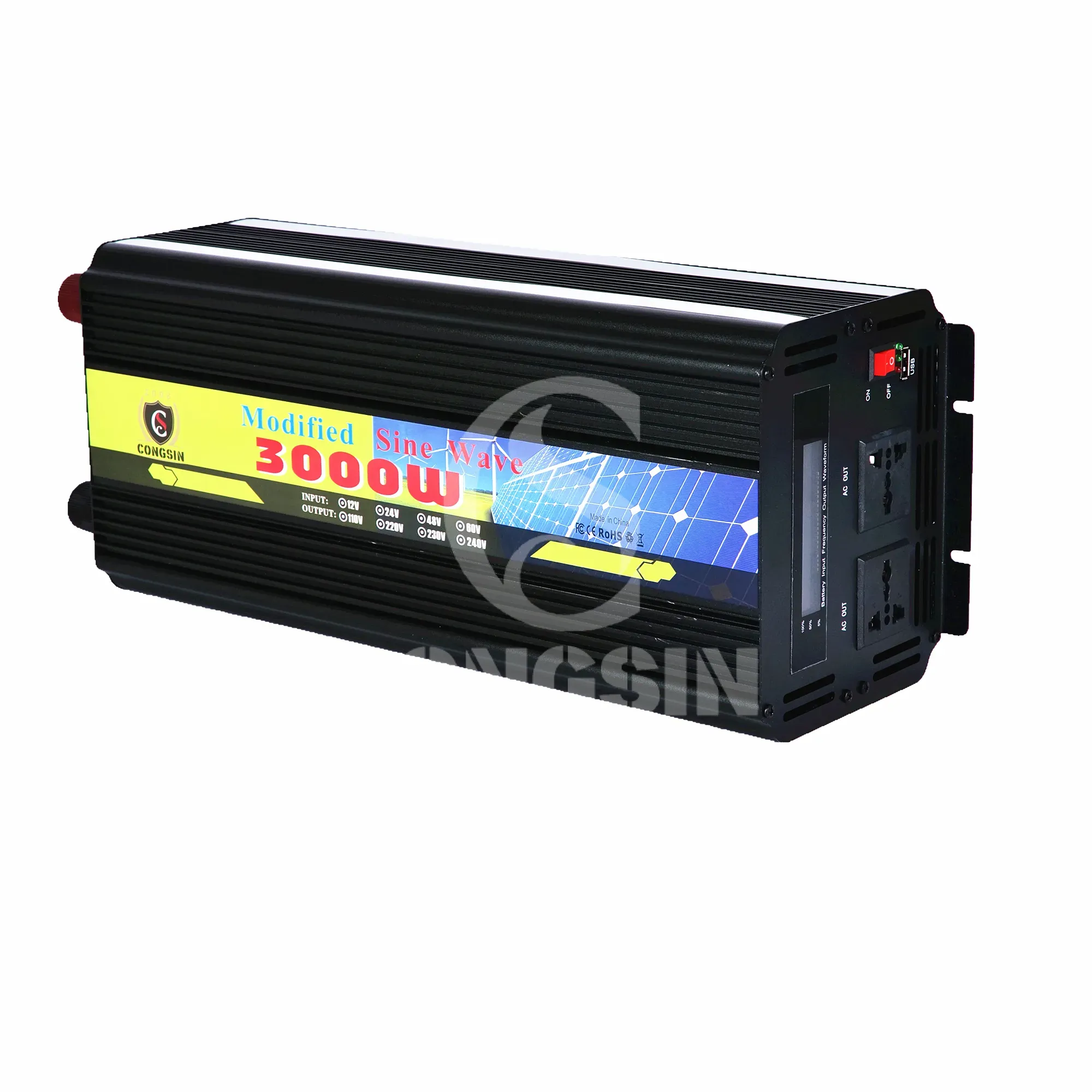
Congsin Full Power 3000W Modified Sine Wave Inverter Peak Power 6000W with LCD Display RV Solar
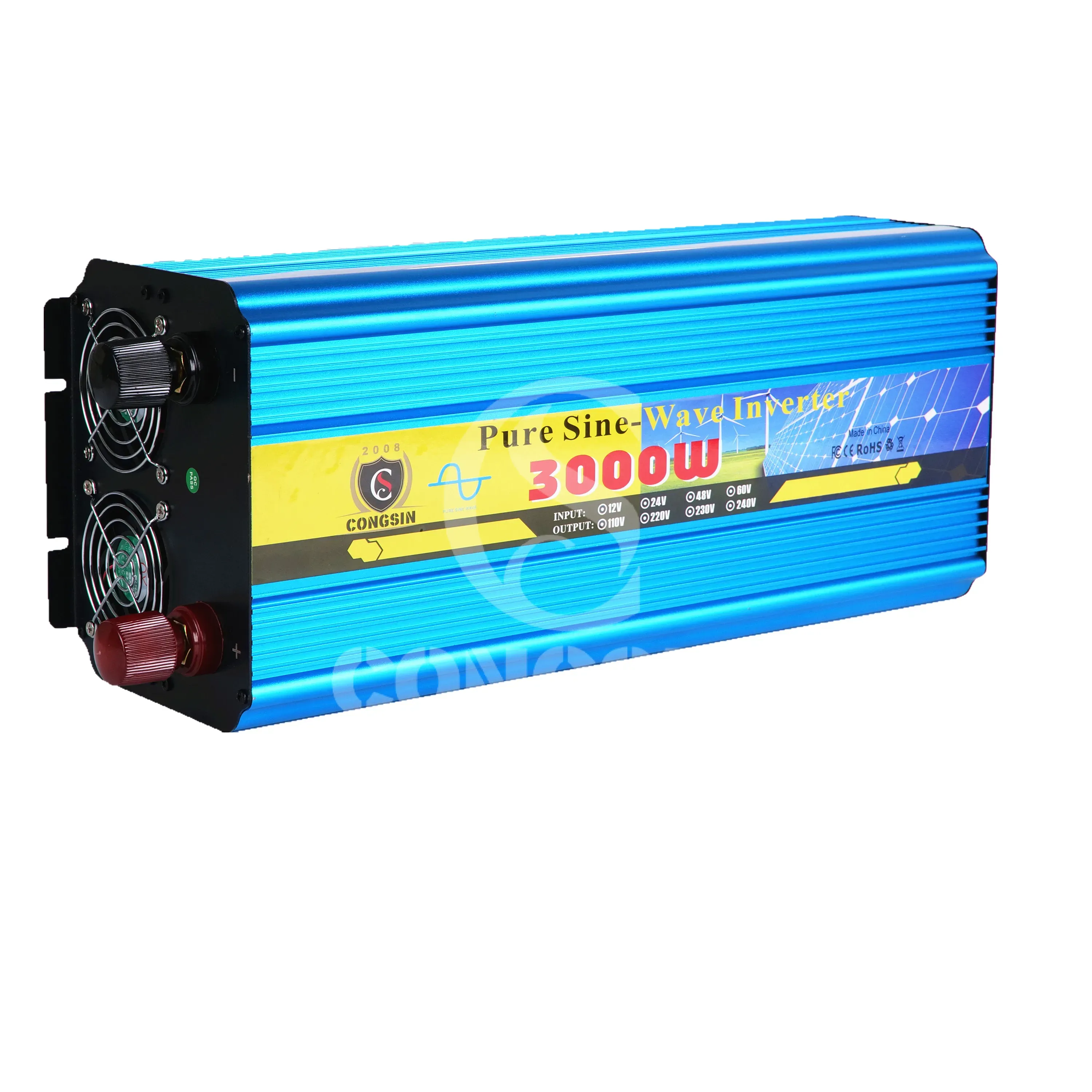
Congsin 3000W LCD Pure Sine Wave Inverter for Home Use Solar Backup Power Inverter Off Grid UPS
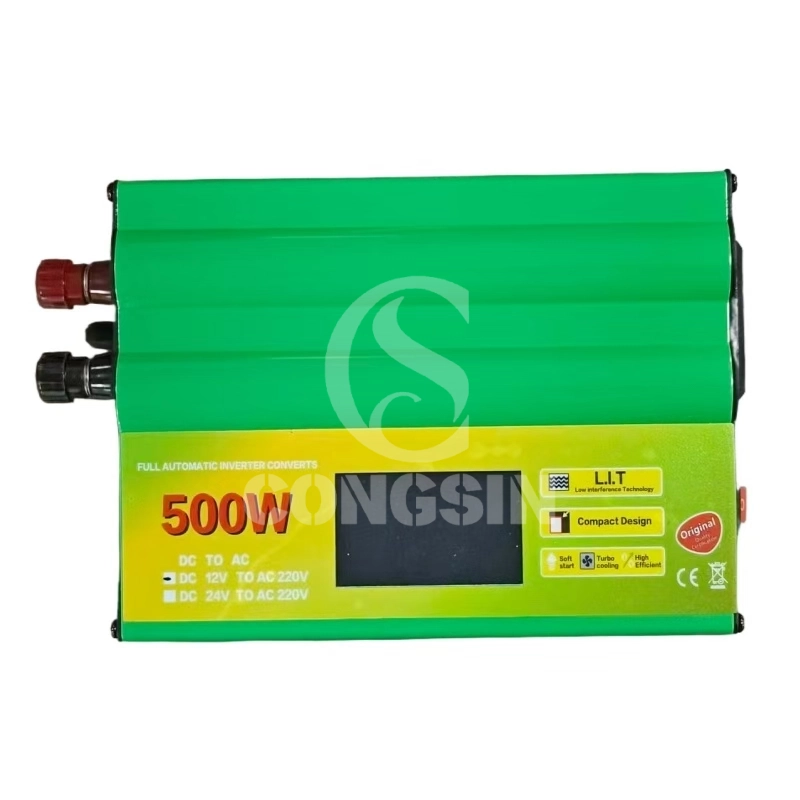
Congsin Modified Sine Wave Inverter 500W 1000W 1500W 12V LED Display Portable for RV Car Solar
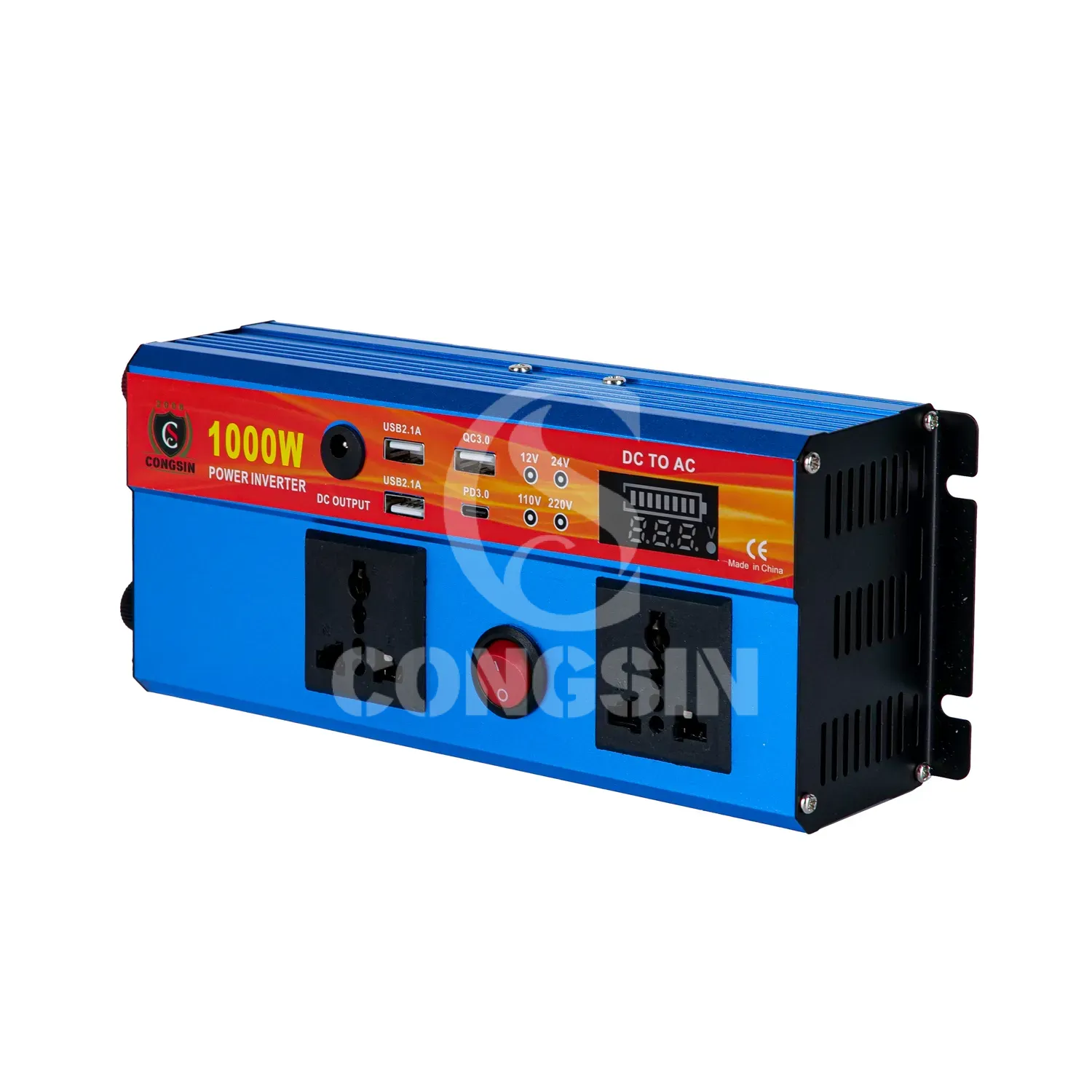
Congsin 1000W modified sine wave inverter with LED display and Type C port car RV power inverter

CONGSIN is a trusted OEM factory for power inverters, solar charge controllers, and DC converters. Reliable solutions for global B2B buyers.
 High Quality
 7/24 Service
 Guaranteed Warranty
© 2025 Congsin. All Rights Reserved.